Design Guide
How to unlock space and practicality in your indian kitchen with creative layouts
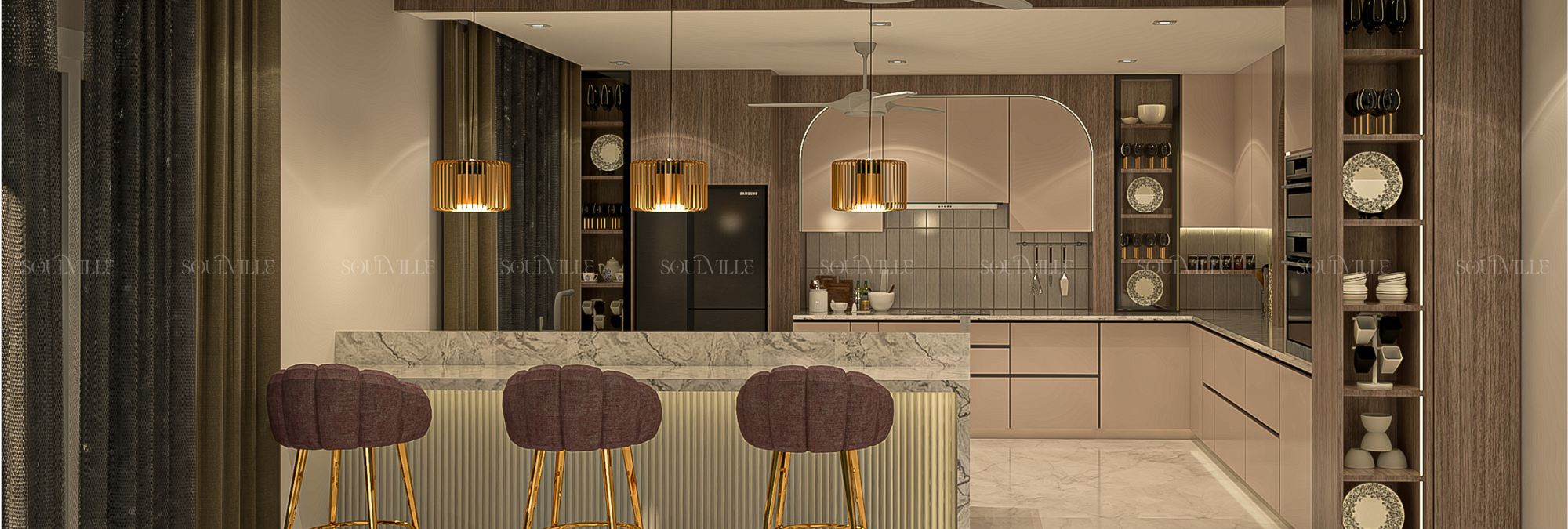
As an interior designer in India, I detect the eccentric challenges of designing kitchens in Indian homes. Our kitchens are called as the heart and soul of our home as it is a place for cooking, family gatherings and celebrations and many other moments. By installing the perfect layout and design elements, we can enhance space and functionality while acknowledging our customs and vibrant traditions. Here’s how you can build a kitchen that’s both practical and beautifully pleasing.
Content List:
- Understanding your Space
- Open Concept Layout
- Zoning for Efficiency.
- Vertical storage solutions
- Smart Appliances
- Flexible Furniture
- Lighting and color
#1. Understanding your space
Before we embark on designing your kitchen, it’s imperative to minutely examine the space. The size of the room, it’s shape and layout should be taken into consideration along with any existing features like windows, doors and electrical outlets. This helps in determining the most practical layout and deducting potential design challenges.
Here are the key factors to assess when examining your kitchen space:
- Size: Is the kitchen large, small or in an unusual shape? The size will right away affect the layout choices available.
- Shape: Is it rectangular, square or L shaped? Each shape comes with its own pros and cons for kitchen design.
- Natural Light: How much light does your kitchen get? Because this can impact your entire mood and atmosphere of the space.
By carefully examining these elements, you can design a kitchen layout that is both versatile and visually appealing.
#2. Open Concept Layout
In many Indian homes, the kitchen is increasingly combining the dining or living areas, encouraging a sense of connectivity. This layout blends the kitchen with the dining and living areas, building a seamless flow and connection. Breaking down the walls between these areas promotes a more open and welcoming atmosphere perfect for entertainment and family get-togethers.
Listing you out several advantages of open-concept kitchens:
- Increased social interaction: By breaking down physical barriers, you can easily communicate with family and guests while preparing your food.
- Improved natural light: Open layouts often allow more sunlight to brighten the kitchen, making a more airy and pleasant space.
- Enhanced visual appeal: The subtle connection between the kitchen, dining and living areas gives a coordinated and visually appealing design.
- Greater flexibility: Open-concept kitchens can merge with various lifestyles. For example, you can easily rearrange furniture or adjust the seating zone to suit separate occasions.
However, open-concept layouts may not be perfect and ideal for everyone. If you prefer a more private kitchen space, a traditional, enclosed layout might be a better choice. The best option depends on your lifestyle inclination and personal preferences.
Pro Tip: Install a large island that doubles as a dining area. This allows for unchallenging and calm interaction while cooking and even makes serving meals directly from the kitchen easier.
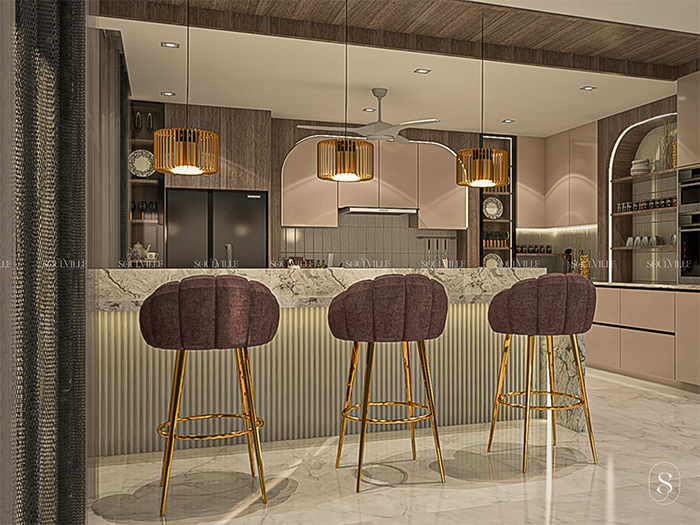
For a client, we designed a kitchen that flows into a glaring dining area. The space featured a huge island with tall bar stools for casual dining and socializing.
#3. Zoning for Efficiency
Designing separate zones for cooking, preparation and cleaning can notably improve workflow by reducing unnecessary movement. For instance, your cooking zone could have a stove, oven, and hood, while the preparation zone can include countertops, a chopping board, and a spice shelf. The cleaning zone would generally feature the sink, dishwasher and garbage disposal.
While planning your zones, do give some thought to the kitchen’s flow and your natural movements. The aim is to curb crossing paths with others or experiencing clutter. Also, consider that your frequently used zones should be easily accessible and well lit.
Pro Tip: Use color-coded utensils or storage containers to characterize each zone, making it easier to quickly find what’s needed while cooking.
#4. Vertical Storage Solutions
While taking about space, it is generally limited in Indian kitchens. Therefore, vertical storage is a must! Consider these productive considerations:
- Floor-to-ceiling cabinets: Increase height to keep items that are not frequently used like seasonal utensils, freeing up counter space.
- Wall-mounted shelves: Incorporate shelves for frequently accessed items such as spices and utensils, keeping countertops free and not clumsy.
- Pull-out drawers: Install pull-out drawers inside the cabinets for easy reach to deep-stored items without paining your back.
- Corner shelves: Utilize untouched corners with specially designed angled shelves to give birth to extra storage that was never imagined without cluttering the floor space.
These vertical solutions can help maximize storage in even the most compact kitchens.
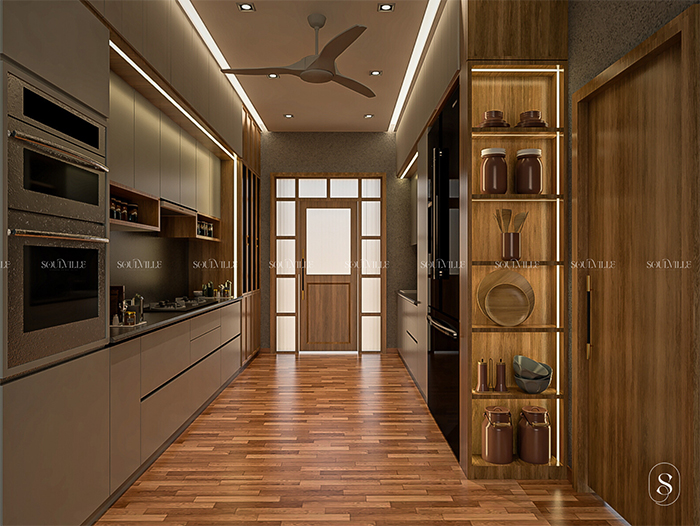
For a small apartment, we suggest creating floor-to-ceiling cabinets and wall-mounted shelves, using pull-out drawers for spices and utensils to keep everything accessible smoothly.
Pro tip: Add hooks or magnetic strips for frequently used items like ladles and knives to release counter space.
#5. Smart Appliances
Smart technology is converting kitchens, making them more systematic and accessible. Smart appliances celebrate features like inventory management, programmable controls, and energy efficiency. For instance, a smart refrigerator can keep in check about the groceries, plan meals and lessen food waste, while a programmable oven checks the apt cooking time and temperature for perfect results. These appliances can also help minimize energy consumption and decrease your carbon footprint.
Pro Tip: Buy energy-efficient appliances especially those suited to Indian style cooking, such as pressure cookers and induction stoves to save electricity bills.
#6. Flexible Furniture
Mobile furniture offers flexibility for multiple cooking and dining needs, making your kitchen both stylish and practical. Here’s how flexible furniture can help your space:
- Maximize space: Foldable and mobile pieces can be kept away when not in use, freeing up space in your kitchen.
- Create different workspaces: A portable kitchen island can help in preparation or serving, depending on your needs.
- Stay organized: Furniture with in-built storage helps to keep your kitchen orderly and organized.
- Adapt to changing needs: Modular furniture can be repositioned to suit your changing needs, whether you are redecorating or moving.
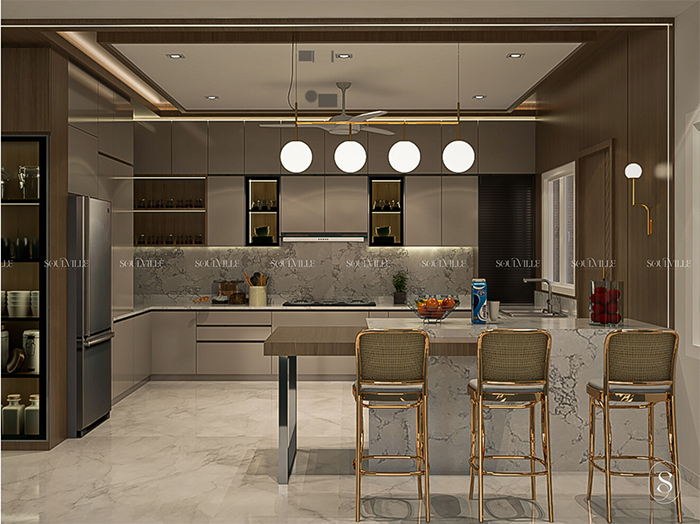
<For one of our clients, we used a foldable dining table that expands for larger gatherings, giving surface area for serving and providing extra surface area for serving food and preparation.
Pro Tip: Select furniture with in-built storage, like benches with compartments to maximize convenience without compromising on style.
#7. Lighting and Color
Light colors can make your kitchen feel larger and brighter, while well-planned lighting improves practicality. The right blend of lighting and color creates an inviting ambiance. While natural light is suitable, artificial lighting like overhead, under-cabinet, and task lighting projects out a well-lit workspace.
- Color: Pick colors that reflect your taste, accompanies your kitchen and consider natural light. Dark colors may make the space look smaller, while lighter shades make it bigger and wider. Balance out the colors to build a coordinated and visually appealing design.
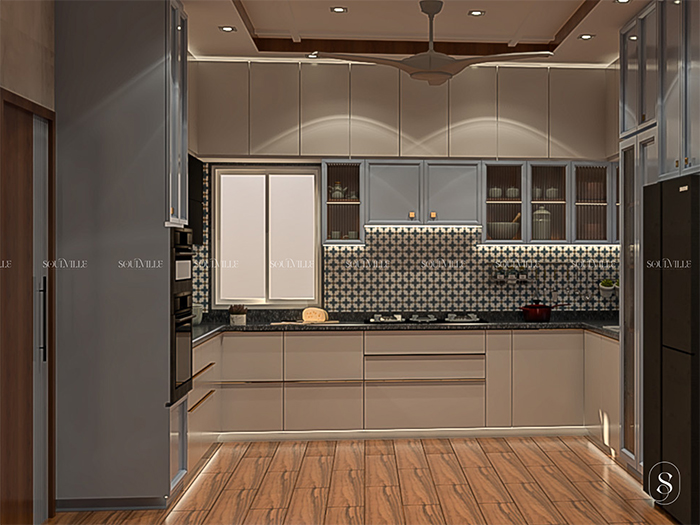
In a costal home, we utilized soft whites and blues for an airy feel with under-cabinet lighting to highlight work surfaces and add warmth during cooking in the evening.
Pro Tip: Use layered lighting- ambient, task and accent- to create an adaptable environment that suits different times of day and other kitchen activities.
FAQ:
- What are the best kitchen layouts for small spaces?
A: Open-concept layouts, L-shaped and gallery kitchens work well. Use vertical storage and multi- functional furniture to maximize space.
- How can I make my kitchen more ergonomic?
A: Make sure you have comfortable countertop heights, keep used items within reach always and arrange appliances to reduce unnecessary commotion.
-
What materials are best for Indian kitchens?
A: Granite or quartz for countertops, tiles for backsplashes and wood or stainless steel for appliances and cabinetry.
-
How can I incorporate smart technology into my kitchen?
A: Install smart appliances like refrigerators with inventory apps and programmable ovens and use smart phone-controlled lighting systems.
-
What are some storage solutions for a clutter-free kitchen?
A: Use pull-out shelves, lazy susans, drawer organizers and vertical storage with floor-to-ceiling cabinets and wall-mounted shelves.
-
How can I add personal touches to my kitchen design?
A: Exhibit family heirlooms, personalized artwork or framed family recipes for warmth and character.
-
What lighting options work best in kitchens?
A: Layer lighting is crucial. Use ambient for overall light, task lighting for work areas and accent lighting for décor highlights.
-
How to ensure a sustainable kitchen?
A: Choose energy-efficient appliances, eco-friendly materials and maximize natural light and ventilation for reduced energy use.
Conclusion:
At Soulville, we design kitchens that combine functionality and cultural aesthetics. Making use of local materials, ergonomic layouts, and smart storage, we expand space while adding custom touch according to taste and also that reflect your heritage. Sustainable choice upgrades both style and eco-friendliness. Contact us today to build your ideal kitchen with our expert designers.